
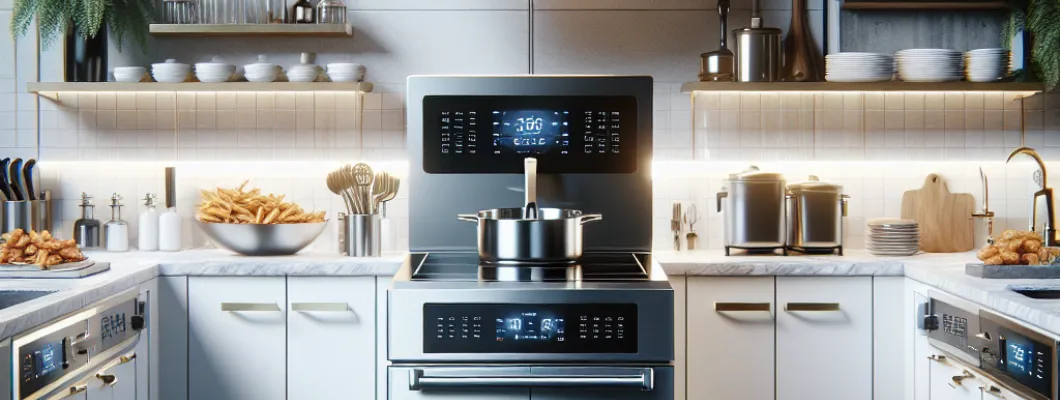
Revolutionizing Kitchen Safety with Induction Fryers
In the bustling environment of a professional kitchen, where precision, speed, and safety are paramount, the introduction of induction fryers marks a significant advancement. These innovative appliances not only enhance efficiency but also elevate safety standards, addressing longstanding safety concerns associated with traditional frying methods. As culinary professionals seek to optimize their operations, induction fryers emerge as a cutting-edge solution that combines technology and safety seamlessly.
Section 1
Traditional frying methods, while effective, come with a handful of safety challenges. Open flames and hot oil present significant risks, including the potential for burns, oil fires, and uneven heating. In a fast-paced kitchen environment, these risks are compounded, leading to accidents that can compromise both the well-being of staff and the operation's efficiency. Ensuring safety in the kitchen is not just about preventing injuries but also about maintaining a smooth workflow where chefs and kitchen staff can operate confidently and effectively.
Section 2
Induction fryers offer a practical solution to these challenges, providing several safety advantages over traditional fryers. First and foremost, induction technology eliminates the need for an open flame, significantly reducing the risk of fire. By using electromagnetic fields to heat the cooking vessel directly, induction fryers ensure that only the pot or pan becomes hot, leaving the surrounding area cooler and safer to touch.
Moreover, induction fryers are designed with advanced temperature controls. This feature not only ensures consistent cooking results but also prevents oil from overheating, which is a common cause of kitchen fires. Staff can set precise temperature settings, minimizing the risk of accidents caused by fluctuating temperatures.
Another safety feature of induction fryers is their rapid response to changes in heat settings. Unlike traditional fryers that retain heat even after being turned off, induction fryers cool down quickly, reducing the risk of burns and making the kitchen environment safer.
Section 3
Numerous kitchens have already embraced the technology of induction fryers, integrating them into their daily operations with impressive results. For instance, in high-volume establishments, where the demand for quick turnaround is high, induction fryers provide a reliable and efficient solution. Chefs have reported not only a reduction in the number of accidents but also an improvement in the quality and consistency of fried dishes.
Restaurateurs have noticed that induction fryers contribute to a calmer, more organized kitchen environment. The absence of open flames and the presence of precise control over cooking temperatures enable a more focused and professional atmosphere, allowing chefs to concentrate on creativity and quality rather than safety concerns.
Section 4
- Are induction fryers more expensive than traditional fryers?
While the initial investment might be higher, the long-term savings in energy efficiency and reduced safety incidents often justify the cost.
- Do induction fryers require special cookware?
Yes, induction fryers require cookware with a magnetic base to function properly. However, many professional kitchens already utilize compatible cookware.
- How does energy efficiency compare with traditional fryers?
Induction fryers are generally more energy-efficient as they heat the cookware directly, reducing energy waste and operational costs.
Section 5
Induction fryers represent a transformative technology that enhances kitchen safety while also improving operational efficiency. By mitigating common risks associated with traditional fryers, such as open flames and uneven heating, these appliances allow culinary professionals to focus on delivering exceptional dining experiences. With their precise temperature control, rapid heating and cooling capabilities, and energy-efficient design, induction fryers are poised to become a staple in modern kitchens. For establishments looking to prioritize both safety and quality, embracing induction fryers is not just a trend—it's a smart investment in the future of culinary excellence.