
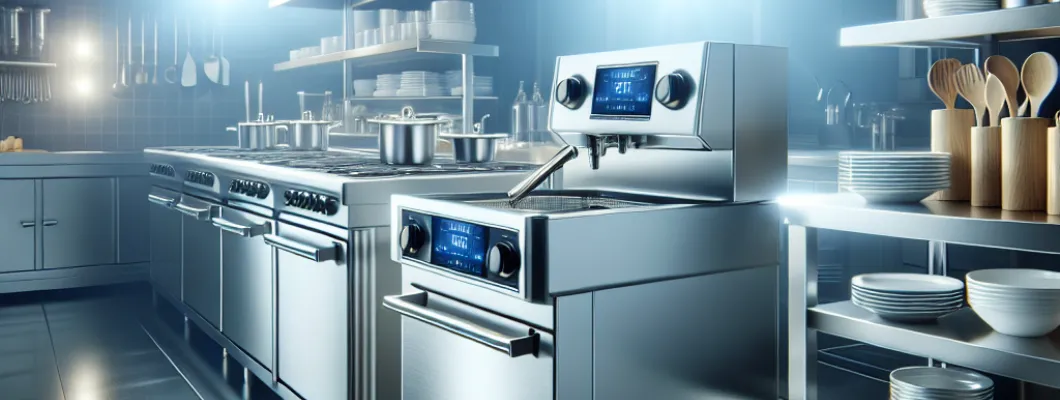
Revolutionizing Commercial Kitchens: How Induction Fryers Reduce Oil Usage and Cut Costs
In the fast-paced world of commercial kitchens, maximizing efficiency while minimizing costs is crucial. As restaurateurs and catering professionals strive to meet the demands of discerning customers, they are continually on the lookout for innovative solutions that can elevate their culinary operations. One such innovation is the induction fryer, a kitchen appliance that not only enhances cooking capabilities but also significantly reduces oil usage and cuts costs. By embracing this technology, businesses can optimize their food preparation processes and deliver exceptional results.
The Challenge: Managing Oil Consumption and Operational Costs
Traditional deep fryers, while ubiquitous in commercial kitchens, present several challenges. They often require substantial quantities of oil to operate efficiently, leading to increased operational costs. Moreover, the continuous heating process can accelerate oil degradation, necessitating more frequent oil changes and resulting in additional expenses. Beyond cost concerns, there is also the environmental impact to consider—discarded cooking oil contributes to waste management issues, adding another layer of complexity for businesses committed to sustainable practices.
In this context, the need for a more efficient solution becomes apparent. Induction fryers have emerged as a compelling alternative, offering a transformative approach to frying that addresses these challenges head-on.
Practical Advice: Leveraging Induction Fryers for Cost Efficiency
Induction fryers utilize electromagnetic energy to generate heat directly within the cooking vessel. This not only ensures rapid and precise temperature control but also minimizes energy wastage. Here are some practical ways induction fryers help reduce oil usage and cut costs:
- Efficient Heating: Induction technology heats the oil more uniformly, reducing the need for excessive amounts of oil to maintain an ideal frying temperature. This leads to lower overall oil consumption.
- Faster Cooking Times: Induction fryers heat up quickly, shortening cooking times and decreasing energy usage. This efficiency translates into savings on utility bills.
- Prolonged Oil Life: With precise temperature control, oil does not reach excessive temperatures that accelerate degradation. This prolongs the life of the oil, reducing the frequency of oil replacements and associated costs.
- Less Oil Absorption: Food fried in induction fryers tends to absorb less oil, resulting in healthier, less greasy meals. This not only improves food quality but also further reduces oil usage.
Behavior or Organization in Action: Embracing Induction Technology
Many businesses have already witnessed the transformative benefits of adopting induction fryers. A prominent example is a bustling urban restaurant that transitioned from traditional fryers to induction technology. By making this switch, they reported a 30% reduction in oil costs within the first six months. The precision heating of induction fryers allowed them to maintain consistent food quality while significantly cutting down on oil usage.
Additionally, catering companies have found induction fryers to be invaluable assets when serving large crowds at events. The rapid heat-up and efficient cooking capabilities ensure timely service, while the reduced oil consumption aligns with their sustainability goals. These organizations are not only enjoying cost savings but are also positioning themselves as industry leaders in adopting eco-friendly practices.
Short Answers to Frequently Asked Questions
- Do induction fryers require special cookware? Yes, induction fryers require cookware that is compatible with induction technology. This typically includes ferrous metal pots and pans.
- Are induction fryers more expensive than traditional fryers? While the initial investment may be higher, the long-term savings on energy and oil costs make induction fryers a cost-effective choice.
- How often does the oil need to be changed in an induction fryer? Induction fryers prolong oil life, so oil changes can be less frequent compared to traditional fryers. However, regular monitoring is essential to maintain food quality.
- Can induction fryers handle large volumes of food? Yes, induction fryers are available in various sizes and capacities, making them suitable for both small-scale and large-scale operations.
Elevating Kitchen Efficiency with Induction Fryers
As the culinary industry evolves, embracing technological advancements like induction fryers is essential for maintaining a competitive edge. By reducing oil usage and cutting costs, induction fryers empower businesses to deliver exceptional culinary experiences while optimizing their operations. Whether you’re a restaurant owner, caterer, or food service manager, exploring the benefits of induction technology could be a game-changer for your kitchen. With induction fryers, the path to cost efficiency and sustainability is not only attainable but also remarkably rewarding.